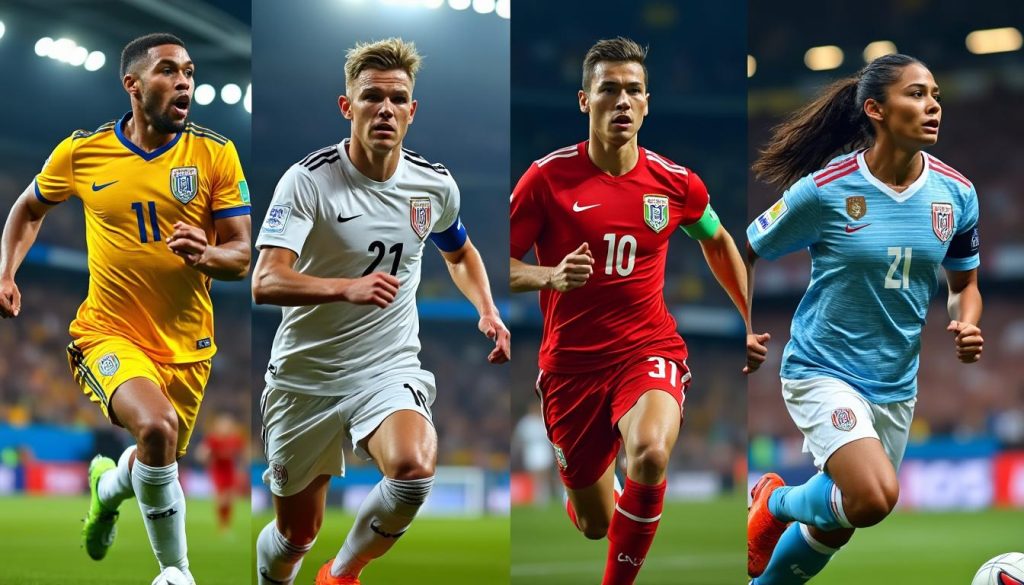
The road to the 2026 FIFA World Cup in Canada, Mexico, and the United States is set to feature an intense competition among the world’s best footballing nations. While group winners from the European qualifiers have secured direct invitations, the fate of many others hinges on a pivotal stage known as the play-offs. This phase will be contested by twelve group runners-up from UEFA qualifiers and an additional four teams that earn their spots based on their performance in the 2024–25 UEFA Nations League. These sixteen teams, divided into four play-off paths, will battle it out in knockout matches held in March 2026, where winning a solitary match could make the dream of World Cup participation a reality. Concurrently, Africa is gearing up for its own high-stakes play-offs, where four best runners-up from its qualifying groups will vie for a chance to advance to the intercontinental playoffs. The brewing tension and competitive fervor across continents promise a thrilling buildup to one of the most anticipated sporting events globally.
Key highlights:
- UEFA’s play-offs feature 16 teams: 12 European qualifying runners-up plus 4 top Nations League groups winners.
- The play-off format includes single-leg semi-finals and finals, maximizing drama in March 2026.
- Africa’s four best runners-up will compete for one intercontinental playoff berth.
- UEFA’s draw and seeding policies incorporate FIFA rankings and political considerations.
- A tight schedule with venues and hosts confirmed by December 2025 ensures smooth logistics.
- Players face suspensions from card accumulations, adding extra tactical caution.
UEFA Play-Offs Structure: Four Paths to the World Cup
The UEFA second round qualifiers, commonly called the play-offs, define the final four European representatives at the 2026 World Cup. This phase brings together sixteen teams: the twelve runners-up of the initial qualification groups and four additional teams selected based on their 2024–25 UEFA Nations League performance but who finished outside the top two of their qualifiers. The blend of these teams allows both consistent group performers and Nations League contenders a fair chance at World Cup qualification.
The sixteen squads are split into four distinct paths, each containing four teams. Each path holds two single-leg semi-finals with the winners progressing to a one-off final to clinch their World Cup spot. The high stakes and single-elimination format promise an exhilarating rollercoaster for fans and players alike. The semi-finals are scheduled for 26 March 2026, followed by the path finals on 31 March 2026.
Seeding and Host Selection
The draw for the play-off paths uses a seeding system that integrates FIFA Men’s World Rankings published in November 2025. The twelve runners-up are allocated into pots 1 through 3 based on their rankings, while the four Nations League qualifiers automatically enter pot 4 as unseeded teams. Matchups are then arranged so that the highest-ranked teams host their semi-final matches, giving an edge to better-performing teams during qualifying stages.
The finals’ host venue for each path will be selected by a draw from the two semi-final winners, creating a thrilling suspense around home advantage for these decisive matches. Although the competition is fierce, careful planning balances fairness and spectacle. Political restrictions prevent certain matchups, such as Armenia vs. Azerbaijan or Kosovo vs. Serbia, to maintain the integrity and security of the tournament.
Key Features of the UEFA Play-Offs
- Single-leg knockout matches, radically raising the stakes for all involved.
- Extra time comprising 30 minutes with allowance for a sixth substitution if tied after normal time.
- If still deadlocked, matches are decided by penalty shoot-outs, adding to the drama.
- Disciplinary rules apply, with suspensions carried for red cards and accumulated yellows affecting eligibility in the semi-finals.
- All matches played under centrally coordinated venues, confirmed by December 2025, ensuring standards for fans and sponsors like Adidas, Nike, and Puma.
| Play-Off Path | Semi-Final Matchups | Final Host Determination |
|---|---|---|
| Path A | Semi-final 1 & 2 winners face off | Draw between winners’ venues |
| Path B | Semi-final 3 & 4 winners face off | Draw between winners’ venues |
| Path C | Semi-final 5 & 6 winners face off | Draw between winners’ venues |
| Path D | Semi-final 7 & 8 winners face off | Draw between winners’ venues |
This structure not only emphasizes meritocracy but also supports a thrilling narrative for football fans worldwide, with brands like Coca-Cola, Visa, and Qatar Airways heavily investing in promotional campaigns timed to these crucial matches.

African Qualifiers: The Crucial Play-Offs for the Best Runners-Up
Africa’s qualification journey for the 2026 World Cup features an intriguing dynamic. The continent secures nine direct spots in the tournament, awarded to the winners of the nine qualification groups. However, for the teams narrowly missing top spot, all is not lost: the four best runners-up across these groups are rewarded with a lifeline via the CAF play-offs.
This secondary chance provides immense competitive tension, as only one of these four runners-up will advance to the intercontinental playoff, where they will face a team from another confederation for a final World Cup berth.
Criteria for Best Runners-Up and Current Standings
The ranking of the best runners-up considers points accumulated, goal difference, and other tiebreakers across the nine groups. As of now, Gabon (Group F) leads this provisional ranking with 19 points and a goal difference of +10, followed by Madagascar and DR Congo both with 16 points and +7 goal difference, and Burkina Faso holding 15 points but an impressive +12 goal difference. Cameroon, Namibia, and Uganda are also within striking distance, emphasizing how every matchday holds critical significance.
- Best Runners-Up (Provisional): Gabon, Madagascar, DR Congo, Burkina Faso
- African Qualifiers Secured: Morocco and Tunisia
- Playoff Matches Venue: Neutral grounds in Morocco, November 2025
- Match Format: Semi-finals and final, one-legged knockout
| Team | Points | Goal Difference |
|---|---|---|
| Gabon | 19 | +10 |
| Madagascar | 16 | +7 |
| DR Congo | 16 | +7 |
| Burkina Faso | 15 | +12 |
| Cameroon | 15 | +10 |
For African fans, these play-offs are arguably as tense as the main tournament itself, with national pride and future FIFA World Cup dreams on the line. Sponsors such as Hyundai, Budweiser, and Hisense are heavily engaged in amplifying the excitement around these clashes, ensuring global audiences stay connected.
How FIFA World Rankings Influence the UEFA Play-Off Dynamics
The FIFA World Ranking plays a critical role in shaping the UEFA play-off paths. Teams are seeded into pots reflecting their relative positions, affecting who they face and where matches occur. This system affects strategies at national team levels, with federations closely monitoring their ranking trajectories as 2025 progresses.
For instance, a team ranked higher gains the distinct advantage of hosting a semi-final, an element that can psychologically and tactically influence outcomes. Furthermore, the Nations League group winners that didn’t finish top two in their qualifiers gain entry into pot 4, often making them wild cards capable of causing upsets.
FIFA Rankings Impact Chart
| Pot | Teams | Ranking Range (Nov 2025) | Role in Draw |
|---|---|---|---|
| Pot 1 | Top runners-up | Top 4 runners-up teams | Hosts semi-finals in matches 1, 3, 5, 7 |
| Pot 2 | Mid-level runners-up | Next 4 runners-up teams | Hosts semi-finals in matches 2, 4, 6, 8 |
| Pot 3 | Lowest ranked runners-up | Final 4 runners-up teams | Away teams in matches 2, 4, 6, 8 |
| Pot 4 | Nations League qualifiers | Varies (not in top two of qualifiers) | Away teams in matches 1, 3, 5, 7 |
Such a structure adds multiple layers of strategic complexity, encouraging teams to maintain form throughout both the UEFA qualifiers and Nations League fixtures. Additionally, the interplay between these tournaments guarantees that sponsors like Gazprom and other official partners benefit from continuous exposure in varied footballing atmospheres worldwide.
Strategic Importance and Suspensions in Play-Off Matches
Given the knockout nature of the play-offs, the management of player discipline is paramount. UEFA has stipulated clear suspension rules that teams must strategically navigate to field their strongest possible squads during these crucial encounters.
- Automatic suspension for red cards, with the possibility of extended bans for severe offenses.
- Yellow cards accumulate during the qualifying group stage and carry into the play-off semi-finals.
- Yellow card suspensions do not extend into play-off finals, ensuring that players do not miss the final due to accumulation in the semi-final.
- All disciplinary measures affect tactical decisions, such as team selection and on-field behavior.
National coaches often use this information to balance aggression and caution in matches approaching the play-offs. The knowledge that a single yellow card can remove a key player from semi-final contention places a premium on disciplined play. Meanwhile, star players sponsored by big brands like Adidas, Nike, and Puma must maintain a balance between competitive intensity and game intelligence to lead their nations through these high-pressure scenarios.
| Offense | Consequence |
|---|---|
| Red card | Automatic suspension; potential extension for grave misconduct |
| Two yellow cards in qualifiers | Suspension for next play-off semi-final match |
| Yellow cards in semi-finals | Reset before finals; no suspension carry-over |
Such regulations maintain competitive integrity and fairness, ensuring the World Cup qualifier play-offs are contested by the best troops each nation can muster.
Upcoming Fixtures and What Fans Should Expect
With semi-finals penciled in for 26 March 2026 and finals on 31 March 2026, the calendar is packed with decisive moments. The venues, confirmed by December 2025, will be battlegrounds where passion meets precision. Fans worldwide can expect high-octane matches featured by top-tier athleticism, fierce tactical battles, and unforgettable moments.
- Play-off winners earn the final four European World Cup slots.
- Matches hosted across UEFA member nations, with neutral final venues decided by draw.
- Televised globally with major sponsors ensuring vast reach and cutting-edge broadcast quality.
- Fans encouraged to engage with sponsor promotions by Visa, Budweiser, and Hisense during match days.
- Potential for surprises as Nations League qualifiers challenge established runners-up.
These games will serve as a thrilling preview of the intense action anticipated in the 2026 World Cup, setting the tone and building excitement for football lovers worldwide.
For those interested in detailed current updates and the progress of teams, click here to follow the comprehensive coverage.
How many teams participate in the UEFA World Cup 2026 play-offs?
Sixteen teams participate in the UEFA play-offs: twelve runners-up from the qualification groups plus four additional teams from the UEFA Nations League rankings.
What is the format of the UEFA 2026 World Cup play-offs?
The play-offs are divided into four paths with four teams each, consisting of single-leg semi-finals and one final, held in March 2026.
How are the four additional UEFA play-off teams selected?
They are chosen from the top four Nations League group winners who did not finish in the top two of their World Cup qualifying groups, based on the interim Nations League ranking.
What suspension rules affect players in the UEFA play-offs?
Red cards lead to automatic suspensions; accumulating two yellow cards in the qualifiers suspends a player for semi-finals. Yellow cards reset before the finals.
Which African teams are leading in the 2026 World Cup qualifiers?
As of now, Gabon, Madagascar, DR Congo, and Burkina Faso lead the best runners-up rankings aiming for the CAF play-offs to advance to the intercontinental playoffs.