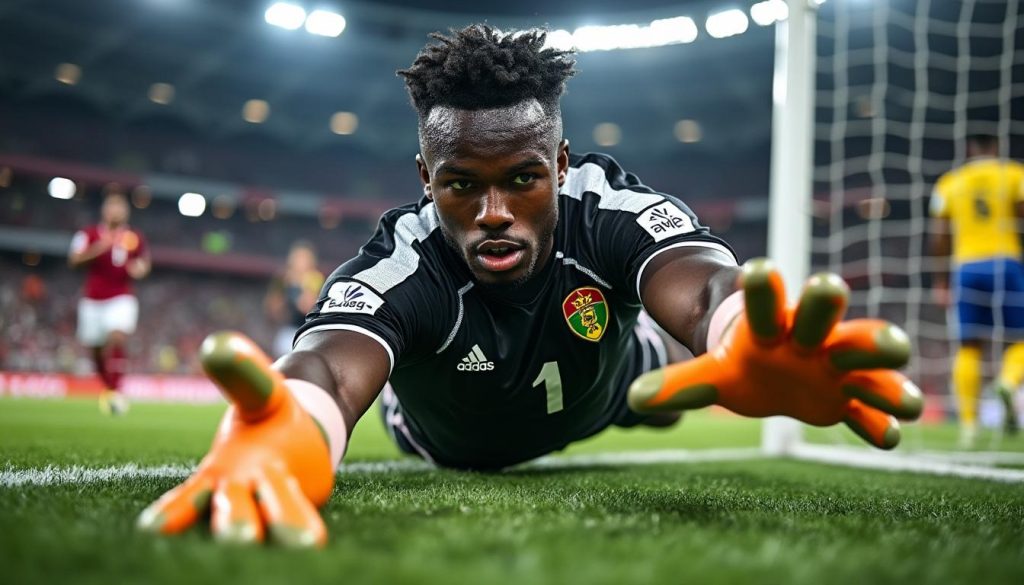
The latest developments surrounding Andre Onana’s status at the Cameroon camp for AFCON 2025 have sent ripples through the African football community. In a surprising turn, the star goalkeeper, currently on loan with Trabzonspor from Manchester United, finds himself excluded from the Indomitable Lions’ squad. This decision comes amid a turbulent period characterized by management upheavals and shifting team dynamics. With the tournament set to commence in Morocco on December 21, 2025, much attention now focuses on how this exclusion and recent staff changes will impact Cameroon’s campaign.
In recent months, the Cameroon Football Federation (FECAFOOT), led by Samuel Eto’o, has undergone substantial structural changes. Notably, the dismissal of Belgian coach Marc Brys and the appointment of domestic coach David Pagou underscore the federation’s intent to reset the team ahead of a challenging AFCON group stage. Yet, the exclusion of Onana—despite his 59 international caps and history as first-choice goalkeeper—marks one of the tournament’s most shocking developments. Other seasoned players like captain Vincent Aboubakar and midfielder André-Frank Zambo Anguissa have also been left out, hinting at wider strategic shifts within the squad.
This article explores the full context behind Andre Onana’s AFCON 2025 status as of December 2023, the controversies enveloping the Cameroon camp, and what these changes imply for the team’s prospects in the Africa Cup of Nations.
Structural Turmoil in the Cameroon Camp Ahead of AFCON 2025
The period leading up to AFCON 2025 has been characterized by intense organizational challenges within the Cameroon football setup. The dismissal of Marc Brys as head coach, under allegations of “professional failure” and “subterfuge,” marks a significant rupture in the national team’s preparations. Brys, who had been appointed under controversial circumstances by Cameroon’s sports ministry in April 2024, faced accusations ranging from inciting players to defy federation directives to failing to maintain relations with sponsors.
Following his sacking, David Pagou, a seasoned local coach known for his tenure in the Cameroonian top flight, assumed the role. His mandate is clear: restore cohesion and deliver results in a high-stakes tournament. However, the timing—just weeks before the tournament—presents inherent challenges. Cameroonian football analyst Njie Enow highlighted the difficulty of rapidly instilling a new playing system and uniting the players under new leadership.
These management upheavals are not new to Eto’o’s presidency of FECAFOOT. Since his initial election in 2021, Eto’o has overseen multiple coaching changes. After replacing Toni Conceicao post-AFCON 2021, he presided over the appointment and eventual dismissal of Rigobert Song, followed by the controversial tenure and swift removal of Brys. Political tensions between the federation and the sports ministry have often seen these appointments contested, exacerbating instability. This convoluted governance environment directly impacts team morale and preparation.
In addition to coaching changes, squad selection has reflected this turmoil. The exclusion of influential figures like Andre Onana hints at a broader strategic overhaul. It also raises questions about player-federation relationships and the influence of recent political dynamics on team composition. With a history of strained interactions between Onana and Eto’o, this omission might not only be about form or fitness but also politics.
Management Conflicts Affecting Team Composition
The strained interaction between the sports ministry, FECAFOOT, and the technical staff has blurred lines of authority in Cameroon football. Onana’s situation epitomizes this conflict. Once a consistent figure between the posts with eight clean sheets in 15 games for the national team, his loan move to Trabzonspor following a decline at Manchester United added to his complex standing within the squad.
While injuries explain some omissions—such as Napoli’s André-Frank Zambo Anguissa—others remain unexplained. The decision to drop Onana and captain Vincent Aboubakar, despite their experience and contributions, indicates a desire from the federation to rebuild the team foundation. Still, such decisions risk disrupting squad chemistry and potentially weakening the lineup ahead of AFCON’s rigorous matches.
Cameroon’s upcoming group features former champions Ivory Coast, alongside Gabon, led by Pierre-Emerick Aubameyang, and Mozambique—a daunting path for a side undergoing transformation. The exclusion of proven performers puts pressure on the remaining and newly introduced talents to fill leadership and performance gaps.
Andre Onana’s Career and Form Leading to the Exclusion from AFCON 2025
The trajectory of Andre Onana’s career leading up to AFCON 2025 underscores the complexity of his current status. Despite a strong international record with Cameroon, his club performances have fluctuated. Initially Manchester United’s first-choice goalkeeper, Onana’s form dipped, precipitating his loan transfer to Turkish side Trabzonspor in September 2025. This move was seen as an attempt to regain confidence and playing consistency.
Onana’s international outings have also been a mixed bag. His early exit from the 2022 World Cup following a suspension by FECAFOOT and his benching during parts of the 2023 AFCON after delaying arrival to fulfill club commitments reflect challenges balancing club and country responsibilities. Furthermore, Onana’s performance in the 3-1 defeat to Senegal, where he was notably at fault for the opening goal, diminished his standing among coaching staff and fans alike.
Despite these setbacks, Onana had reclaimed the starting goalkeeper position ahead of the recent World Cup qualifiers. Nevertheless, his exclusion from the AFCON squad suggests that factors beyond current form influenced the decision. The ongoing governance conflicts within Cameroonian football—the fallout from Brys’ sacking, and tensions with Samuel Eto’o—play undeniable roles in shaping squad selections.
This turn of events has sparked debates over whether Onana’s international career is nearing its end or if this is merely a pause before a potential comeback. The goalkeeper’s future hinges on both his ability to perform at club level and evolving political and sporting circumstances within the national setup.
Comparative Analysis of Goalkeeper Options for AFCON 2025
| Goalkeeper | Club | International Caps | Recent Form | Status for AFCON 2025 |
|---|---|---|---|---|
| Andre Onana | Trabzonspor (loan from Manchester United) | 59 | Inconsistent club form but experience internationally | Excluded |
| Devis Epassy | Dinamo Bucharest | Fewer caps | Solid performances in European clubs | Included |
| Simon Omossola | St Eloi Lupopo | Moderate caps | Strong domestic form | Included |
| Simon Ngapandouetnbu | Montpellier | Emerging talent | Promising club performances | Included |
This roster reveals the federation’s gamble on newer, less experienced goalkeepers over Onana’s established international presence. The decision aims to blend youth and emerging talent, though it raises questions on handling high-pressure moments that veterans like Onana typically manage well.
Impact of the Coach Dismissal and Eto’o’s Role on Cameroon’s AFCON 2025 Prospects
The abrupt replacement of Marc Brys with David Pagou signals a radical reshaping of Cameroon’s strategy in the run-up to AFCON 2025. Brys’ tenure was riddled with conflicts regarding his appointment legitimacy and coaching style, with FECAFOOT accusing him of various failings, including non-compliance with press engagements and strained relations with sponsors. These issues culminated in a chaotic environment, destabilizing team preparations.
David Pagou, promoted from within as an assistant coach, brings local knowledge and a different approach. His familiarity with Cameroonian football’s domestic level might help restore order and impose discipline. Yet, the limited time before AFCON means building an effective playing style and integrating squad members coherently remains a daunting task.
Samuel Eto’o’s presidency has been marked by ambitious visions and unwavering control. His recent re-election fortified his position, enabling decisive interventions such as Brys’ dismissal and sweeping squad changes. While Eto’o’s status garners respect due to his legendary player career, his management style has also attracted criticism for authoritarian tendencies and controversies. The latest team news reflect this dynamic, potentially affecting players’ mental focus and fan expectations alike.
As Senegalese journalist and football analyst Njie Enow noted, forging team chemistry at this late stage is challenging, and Cameroon faces a demanding AFCON group drawing forces with established footballing pedigrees. The question remains whether the reshuffled squad and new leadership can rise to the occasion despite upheavals.
Key Players Dropped and Emerging Talents to Watch in Cameroon Camp
Besides Andre Onana, several established stars have been unexpectedly omitted from the AFCON 2025 squad. Vincent Aboubakar, the AFCON 2021 Golden Boot winner, and Michael Ngadeu, a veteran defender, are missing. Injury explains André-Frank Zambo Anguissa’s absence, but other omissions indicate a strategic pivot. These decisions reflect FECAFOOT’s push for rejuvenation while aiming to inject fresh energy into the team.
Within the squad, younger or less internationally seasoned players such as Bryan Mbeumo, a Manchester United teammate of Onana, and Brighton’s Carlos Baleba, have been included. This infusion of youth aims to add dynamism and future-building potential. Other midfielders and defenders come from a mix of European clubs, reflecting the globalization of Cameroon’s talent pool.
- Goalkeepers: Devis Epassy, Simon Omossola, Simon Ngapandouetnbu, Edouard Sombang
- Defenders: Samuel Kotto, Gerzino Nyamsi, Jean-Charles Castelletto, Nouhou Tolo, Flavien Enzo Boyomo, Mahamadou Nagida, Christopher Wooh, Junior Tchamadeu, Darlin Yongwa
- Midfielders: Martin Ndzie, Carlos Baleba, Arthur Avom, Eric-Junior Dina Ebimbe, Brice Ambina, Jean Junior Onana, Olivier Kemen
- Forwards: Bryan Mbeumo, Christian Bassogog, George-Kevin N’koudou, Danny Namaso, Frank Magri, Karl Etta Eyong, Christian Kofane, Patrick Soko
This blend positions Cameroon with a renewed focus on agility and versatility, although it remains to be seen if the squad can navigate the challenges posed by their AFCON 2025 opponents effectively.
As football fans keep track of ongoing developments, staying informed on injuries and player conditions remains critical, especially in the Premier League where several Cameroonian stars ply their trade. For the latest updates on fitness and transfers, visit Premier League Injuries September Update.
Cameroon’s Group Stage Challenge at AFCON 2025 and Tactical Outlook
Drawn in Group F, Cameroon faces a formidable group stage. They must contend with defending champions Ivory Coast, Pierre-Emerick Aubameyang’s Gabon, and Mozambique. Each opponent presents unique challenges tactically and athletically. Ivory Coast, known for their solid defense and fast counterattacks, will test Cameroon’s resilience. Gabon, buoyed by Aubameyang’s leadership and goal-scoring prowess, poses a threat in the attacking third.
Without experienced stalwarts such as Onana and Aboubakar, Cameroon’s tactical setup under David Pagou is expected to emphasize defensive solidity and seamless transitions. The coach must leverage the squad’s youth and adaptability to compensate for the lack of seasoned campaigners. The African Cup of Nations 2025 is also a stage for breakout teams, and Cameroon’s ability to re-establish itself among the continent’s football elites will depend largely on collective discipline and emergent talents’ impact.
For an in-depth overview of potential standout teams and tournament preview, the AFCON 2025 breakout teams analysis offers insightful perspectives. With high stakes and an unpredictable group phase, every squad must be at its best from the outset.
Why was Andre Onana excluded from Cameroon’s AFCON 2025 squad?
Andre Onana was excluded amid a combination of management disagreements, form concerns, and strategic decisions by the Cameroon Football Federation under Samuel Eto’o’s leadership.
Who replaced Marc Brys as the Cameroon head coach for AFCON 2025?
David Pagou, an experienced domestic coach within Cameroon, was appointed to replace the dismissed Belgian coach Marc Brys just weeks before AFCON 2025.
What challenges does the new Cameroon coach face ahead of AFCON 2025?
With limited preparation time, the new coach must build team cohesion, develop effective tactics, and integrate new players to compete against strong opponents in a difficult group.
How does Onana’s exclusion impact Cameroon’s chances at AFCON 2025?
Onana’s absence removes a seasoned and experienced goalkeeper, potentially affecting defensive stability, but also opens opportunities for younger goalkeepers to prove themselves.
Which key players are absent from the Cameroon squad alongside Andre Onana?
Along with Onana, captain Vincent Aboubakar and midfielder André-Frank Zambo Anguissa are among the notable exclusions from the AFCON 2025 squad.