
The African Cup of Nations (AFCON) 2026 is rapidly approaching, and all eyes in the continent will soon be on Morocco, the host nation, as it plays host to one of football’s most fiercely contested tournaments. Among the competing teams, the Zimbabwe Warriors stand at a pivotal moment in their football history. Drawn into a daunting Group B alongside powerhouses like Egypt—with global superstar Mohamed Salah—regional rival South Africa, and a tactically disciplined Angola side, Zimbabwe faces immense challenges. Returning to the continental stage after missing the previous edition due to suspension, the Warriors must refine their strategies and approach meticulously to seize any chance of advancing to the knockout phase for the very first time in a decade-spanning AFCON journey.
Group stages in tournaments like AFCON are as much about mental toughness and tactical discipline as they are about individual talent and flair. Zimbabwe’s team has demonstrated flashes of potential in recent warm-up games—a notable 2-1 victory against Qatar highlights their capability—while other matches underscore areas needing urgent attention, such as the 3-1 loss to Algeria that exposed defensive gaps. The Warriors’ quest to overcome a long-standing group stage exit barrier relies heavily on concerted team strategy, comprehensive tournament preparation, and a sharp understanding of competitive analysis that can turn narrow margins in their favor. Each element will be pivotal as the team embarks on its opening day showdown against Egypt on December 22, setting the tone for the battles ahead.
As the clock ticks down to the AFCON 2026 kickoff, Zimbabwe’s ambition to write a new chapter in their football story is palpable. The collective focus amongst players, coaches, and supporters centers on creative match tactics, disciplined defensive structures, and extracting maximum value from every set piece opportunity. This article delves deeply into the various dimensions of how Zimbabwe’s Warriors can not only survive but potentially thrive in a group stage fraught with formidable opponents and intense pressure.
Key Points to Watch:
- The Warriors face a formidable Group B lineup that includes Egypt, South Africa, and Angola.
- Defensive compactness and tactical discipline will be critical to cope with superior individual talent.
- Set pieces could become vital scoring opportunities in tight matches.
- Experienced leaders will play a key role in maintaining team composure.
- Smart rotation strategy needed to tackle the demanding AFCON schedule and climate.
- Zimbabwe’s tactical approach will emphasize quick counter-attacks and minimizing possession vulnerabilities.
- Every goal and point counts, given complex qualification rules for knockout rounds.
Strategic Defensive Approaches to Withstand Group B Challenges in AFCON 2026
In the often unpredictable and highly competitive environment of AFCON 2026, Zimbabwe’s Warriors must develop a defensive strategy that strategically counterbalances the overwhelming individual quality found in their opponents, particularly Egypt and South Africa. These teams feature renowned goal scorers and versatile attackers, meaning defensive fragility could lead to devastating consequences in the tightly scheduled group stage. The coaching staff, led by Michael Nees, appears inclined towards solidifying a formation that oscillates between a 4-2-3-1 and a 4-4-2 diamond. This tactical fluidity helps maintain close lines of communication between the midfield and backline, ensuring opposition players have minimal space to create opportunities.
Effective defensive compactness revolves around several critical elements: maintaining a short distance between players to enable collective pressing, forcing opponents to attack sideways rather than penetrating centrally, and ensuring rapid recovery runs to close any potential gaps. This method counters the technical freedom star players enjoy, limiting their ability to unravel defenses single-handedly.
A perfect example could be drawn from Zimbabwe’s previous matches where lapses in defensive positioning led to easy goals conceded. In contrast, the adoption of a disciplined, narrow defensive block—even at the potential expense of possession dominance—can serve as the platform for a few key clean sheets or draws that could, in a competitive group format, prove decisive for progression. Given that the tournament format advances the top two teams and the best four third-placed teams, defensive resilience not only mitigates damage but potentially accumulates precious points. Thus, prioritizing organized play over flamboyant but risky football makes pragmatic sense for the Warriors.
This anchored defensive posture also buys time for counterattack opportunities, as wingers and forwards can exploit opponents overcommitting upfront. The 4-2 pivot with two holding midfielders offers an essential balance, allowing the team flexibility in both defense and quick transition phases. Since teams like Angola are famous for their defensive discipline, Zimbabwe must adopt patience in breaking down opponents, emphasizing efficient organization as their foundation in group stage contests.
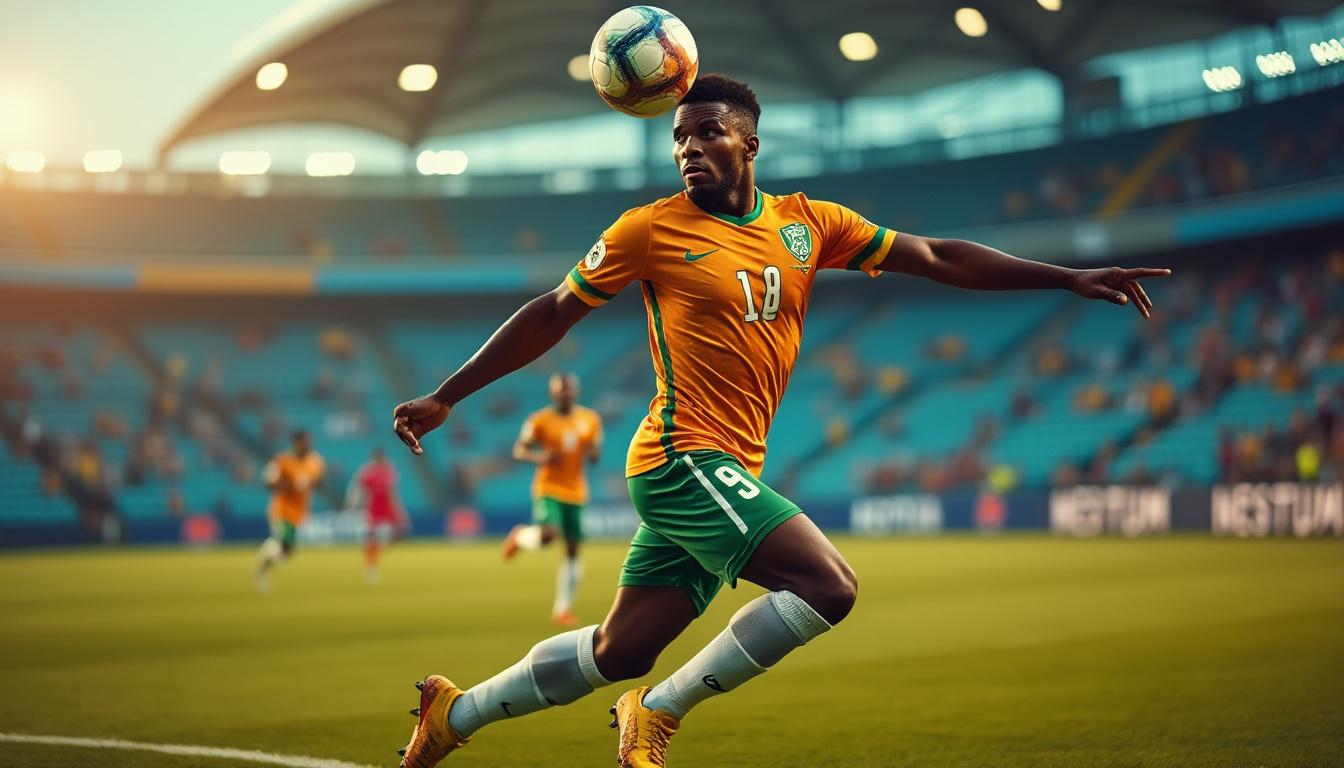
Capitalizing on Set Pieces: Zimbabwe’s Tactical Opportunity for AFCON 2026 Success
Set pieces have long been recognized in football as moments of opportunity that can alter the course of tightly fought matches—particularly in tournaments where margin for error is minimal. Zimbabwe’s Warriors, aware of their group stage challenges, have been focusing considerable training efforts on leveraging corners, free-kicks, and quick restarts to maximize scoring chances. In the context of AFCON 2026, where individual talent rivals may outmatch Zimbabwe in open-play possession, turning set pieces into goalscoring weapons represents a strategic equalizer.
The team’s preparation includes innovative routines such as quick corners designed to catch opponents off-guard, complex near-post clutter formations to create confusion in the rival defense, and meticulously rehearsed free-kick deliveries targeting either tall aerial threats or sharp finishers positioned at strategic zones. This detailed work on set pieces could prove the difference between drawing or winning a match that might otherwise be lost on open play. Notably, the Warriors have incorporated hybrid defensive marking systems—blending zonal and man-marking techniques—to minimize risks posed by opposition set-piece specialists.
Practicing such set-piece strategies demands extraordinary discipline and repetition; it also implies a mental readiness to capitalize whenever an opportunity arises. Clubs that have mastered their routines in African football histories, such as Egypt and South Africa, often showcase the potency of well-executed set pieces. Zimbabwe’s focused training in this area signals a keen awareness of their own limitations and the need to exploit low-variance scenarios that can yield outsized impacts.
The impact of converting just a corner or free kick into a goal goes beyond mere scoreboard statistics—it shifts team morale, unsettles opponents, and influences refereeing dynamics through pressure and momentum swings. The Warriors’ emphasis on set pieces aligns well with their broader tactical game plan of minimizing errors, absorbing pressure, and pouncing decisively on key moments.
Experienced Leadership: Anchoring Zimbabwe’s AFCON 2026 Campaign
Zimbabwe’s return to the grand stage at AFCON 2026 features a blend of youthful exuberance and valuable veteran presence. The coaching staff has wisely incorporated seasoned leaders such as Marvellous Nakamba and Khama Billiat, whose experience and composure under pressure have been critical during the qualification process and recent pre-tournament gatherings. The importance of having such veterans cannot be overstated in a demanding environment like AFCON, where psychological resilience is as key as physical fitness.
Nakamba’s role as a central midfielder who shields the backline while orchestrating play makes him indispensable in maintaining tactical discipline and game tempo. His leadership on the field often helps younger players stay aligned with the team’s defensive compactness goals and quick transition strategies. Meanwhile, Billiat’s creative edge and counter-attacking speed provide critical options to unlock stubborn defenses when possession is relinquished strategically.
Beyond the technical aspects, seasoned players influence the dressing room environment, serving as mentors who manage nerves and instill confidence. Their presence reinforces professional standards in training and matches, ensuring that focus is not lost even under pressure or adverse circumstances, such as a conceding a goal or trailing in crucial games.
Integrating leadership effectively also informs substitution choices and tactical adjustments. Veteran players typically possess a better understanding of how to read game situations and conserve energy, enabling them to be tactically flexible throughout the tournament. The Warriors’ game against Egypt or South Africa will likely demand calm heads and smart decision-making—qualities these veterans provide in abundance.
Adopting Quick Transitions and Smart Possession Strategies to Challenge Powerful Opponents
When rematched against technically superior foes, Zimbabwe’s Warriors must modify their possession philosophy to focus on efficiency rather than dominance. Quick, compact transitions are the linchpin of this approach, relying on central midfielders who can win the ball and promptly distribute it to forwards or wingers exploiting spaces on the flanks. This contrasts with prolonged possession that often plays into the hands of more skilled opponents capable of dictating tempo and patiently probing for gaps.
The coaching team emphasizes selecting attackers who understand timing and space, can press effectively, and are adept at finding channels for incisive runs. Such an approach has the potential to produce clinical counterattacks and put opposing defenses under sudden pressure—often catching defenses out when they are stretched or disorganized.
For example, in the upcoming match against Angola, which tends to be defensively resolute, Zimbabwe can adopt a more adventurous approach, supported by swift transitions to harness attacking spaces. Meanwhile, against Egypt and South Africa, the focus will be primarily defensive for the first half, aiming for disciplined positioning and then exploiting counterattacking opportunities as they arise.
Key players must remain composed and decision-makers quick to exploit moments of opponent vulnerability. A well-executed counter could turn the tide, especially in deadlock situations where the teams adopt cautious first-half game plans. Moreover, managing possession smartly by recycling the ball effectively in midfield restricts risks linked to turnovers that could lead to dangerous counterattacks by opponents.
Fitness Management and Tactical Rotation: Maximizing Zimbabwe’s Stamina Through AFCON 2026
The African Cup of Nations is notorious for its condensed match schedule and the physical demands it places on teams. Zimbabwe’s Warriors face these challenges against the backdrop of Morocco’s unique climate and the demanding travel within the host nation. Effective player fitness management and tactical rotation emerge as key success factors to maintain performance levels across group stage games.
Coach Michael Nees and his staff utilize advanced sports science tools to monitor player fatigue, ensuring that those who start matches remain as fresh as possible while bench players are ready to contribute meaningfully when introduced. Rotations are not merely an exercise in resting players but a strategic decision to adjust tactics based on the match context and opponent profile.
For instance, a defensive setup that aims to absorb pressure against Egypt may require different personnel compared to a more open, dynamic game plan against Angola. Introducing fresh legs, especially in the midfield or wings, after the 60-minute mark can shift momentum decisively. Such substitutions also allow Zimbabwe to maintain intensity, close pressing gaps, or slow down the game as needed.
Furthermore, fitness management extends beyond physical conditioning, encompassing psychological readiness and stress mitigation. The ability of players to stay mentally alert and avoid critical mistakes late in games often distinguishes teams advancing beyond the group phase. Diligent planning around recovery routines, nutrition, and matchday preparation is critical to optimizing readiness.
| Matchday | Opponent | Key Tactical Focus | Fitness/Rotation Strategy |
|---|---|---|---|
| December 22 | Egypt | Defensive compactness, minimal possession, quick counterattacks | Maximize defensive stamina, conservative rotation |
| December 26 | Angola | More aggressive play, exploit flanks, set pieces | Introduce offensive players early, moderate rotation |
| December 29 | South Africa | Balanced defensive and offensive transitions, maintain discipline | Selective substitution to maintain midfield energy |
Taking care of player health and energy throughout the tournament directly impacts Zimbabwe’s ability to maintain tactical intentions and adapt to the unfolding realities of the group stage. Pragmatic rotation and recovery plans can differentiate a resilient side from one collapsing under pressure.
Mental Strength and Matchday Tactical Tips for Zimbabwe’s AFCON 2026 Campaign
Beyond physical preparation and tactical blueprints, Zimbabwe’s success in the AFCON group stage will hinge on mental fortitude and in-game management. The Warriors must cultivate a resilient mindset that emphasizes one match at a time, encourages recovery from setbacks, and capitalizes on small but crucial moments like set pieces, late substitutes, or referee decisions. This psychological toughness often separates advancing teams from those eliminated early.
Matchday strategies should begin with a conservative defensive shape—particularly critical against dominantly skillful teams like Egypt and South Africa. Concentrating on set-piece opportunities will maximize Zimbabwe’s limited scoring chances, while players like Marvellous Nakamba will act as the pivotal anchors, maintaining possession recycling and composure under pressure.
Strict discipline in terms of player conduct on the pitch is also essential. Save for extremely aggressive fouling and avoidable yellow cards that might result in suspensions, because dropping players due to disciplinary issues would significantly harm Zimbabwe’s chances, given the narrow qualification margins.
Finally, vigilance in adapting game plans in real-time remains crucial. Whether exploiting opponent weaknesses on the wings or adopting a more aggressive posture when chasing a result against Angola, the Warriors must remain tactically fluid. The blend of mental strength and tactical astuteness increases Zimbabwe’s chance not only to survive but to prosper in what can be termed one of the most complicated group stages in their AFCON history.
For a detailed exploration on how the warriors can survive a tough group stage in AFCON 2026, interested readers are encouraged to explore the in-depth analysis.
What formation is Botswana likely to use against stronger teams in AFCON 2026?
Zimbabwe is preparing to use formations like 4-2-3-1 or 4-4-2 diamond, focusing on defensive compactness and swift counterattacks.
Who are the key experienced players in Zimbabwe’s squad for AFCON 2026?
Veterans like Marvellous Nakamba and Khama Billiat bring leadership, composure, and tactical nous crucial for navigating tough group stage matches.
How important are set pieces in Zimbabwe’s strategy for AFCON 2026?
Set pieces represent a critical scoring opportunity for Zimbabwe, with specialized routines designed to exploit opponents’ defensive setups and minimize risks defensively.
What are the fitness challenges Zimbabwe faces during AFCON 2026?
The condensed schedule, climate, and travel demand focused fitness management and squad rotation to maintain peak performance levels throughout the tournament.
What mental qualities should Zimbabwe emphasize to succeed in AFCON group stages?
Zimbabwe should cultivate resilience, focus on one match at a time, maintain discipline, and capitalize on small moments to overcome the group’s toughness.