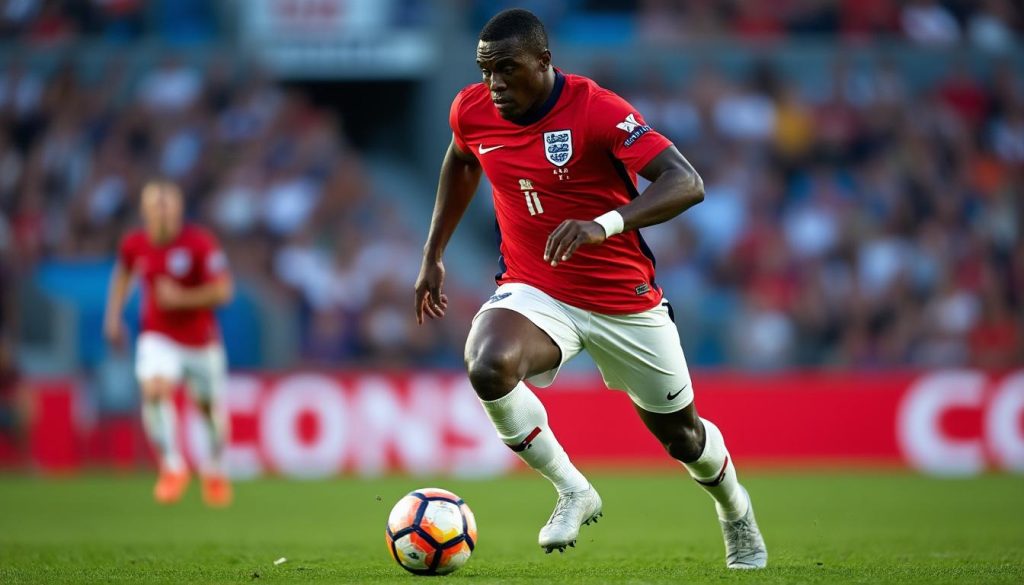
England’s journey to the 2026 FIFA World Cup is marked by one of the richest concentrations of midfield talent in recent memory. The squad, led by manager Thomas Tuchel, boasts a mix of established international stars and emergent Premier League talents. This unique blend offers both an edge in competitive play and a tactical challenge requiring careful management. The squad’s ability to adapt to demanding travel schedules, varying climates, and limited recovery periods will heavily influence their success on the global stage. Midfield, often the heartbeat of any football team, holds the key to England’s potential triumph or setback in this tournament.
With a field of contenders vying for midfield spots, including front-runners Jude Bellingham and Declan Rice, the selection dilemmas have become a popular topic for both pundits and bettors. These two midfield anchors are widely expected to be unquestionable choices, thanks to their consistent performances, leadership qualities, and tactical versatility. However, the competition behind them is intense, with players like Conor Gallagher, Curtis Jones, and Morgan Gibbs-White making persuasive cases for inclusion. This depth ensures that selection decisions will not only shape England’s gameplay but also affect betting markets focused on player appearances and match impact. For enthusiasts seeking detailed strategies and forecasts, Click here for more details.
Selection Challenges and Midfield Depth: Navigating England’s Rich Player Pool
England’s midfield depth heading into the World Cup presents an enviable yet complex dilemma for Thomas Tuchel. The abundance of talent extends from defensive stalwarts to creative playmakers, compelling the manager to strike a delicate balance between individual brilliance and team cohesion. This section delves into the intricate challenges involved in finalizing the squad, highlighting the impacts of player form, team strategy, and competitive pressure.
At the core of the selection conversation lies the role of Declan Rice. Positioned as the defensive midfielder, Rice’s ability to break up play, maintain positional discipline, and transition into defensive roles makes him indispensable. His strength sets the baseline upon which Tuchel can build tactical variations tailored to opposition threats. For example, against opponents wielding aggressive pressing systems, partnering Rice with similarly composed, quick-passing teammates can neutralize pressure and control possession. Conversely, in matches targeting swift counters, a more dynamic box-to-box midfielder complements Rice’s steadiness, allowing England to exploit spaces and transition rapidly.
Beyond Rice, the competitive landscape thickens. Jude Bellingham stands out for his creative attacking impulses, dynamism, and vision – a match-winner capable of turning tight games around. His presence demands consideration alongside other talented candidates like Phil Foden and Morgan Rogers, whose innovative dribbling and incisive passing offer tactical flexibility and unpredictability. Emerging stars such as Adam Wharton and Elliot Anderson add further depth, providing managers with alternatives to rotate and adapt to the taxing tournament schedule.
Selection also encompasses psychological and performance-related factors. Tournament play often stresses players physically and mentally, and a well-balanced squad must include individuals who demonstrate resilience and leadership. Tuchel’s previous team management preferences suggest he values midfielders who contribute beyond statistics — those who elevate team morale, adapt seamlessly, and maintain intensity despite rotation and substitution. This human element enriches the tactical decisions, enabling England to maintain consistency while leveraging their deep bench.
Managing this talent pool extends beyond identifying the best players. It requires an appreciation of how midfield combinations interact. Certain pairings offer defensive solidity but limit attacking creativity, while others can overwhelm defenses offensively but risk exposing vulnerabilities at the back. The tactical conundrum faced by Tuchel is whether to prioritize balance or firepower in the starting lineup, adjusting dynamically to different phases of the tournament.
For bettors, these selection challenges translate into strategic considerations. Watching pre-tournament friendly rotations, understanding player chemistry, and anticipating who adapts best to tactical instructions can inform wagers on appearances, minutes played, or performance-based markets like assists or goals from midfielders. This nuanced understanding elevates betting beyond mere guesswork into insightful analysis, where knowledge of squad depth and player interaction becomes paramount.
Tactical Balance: Integrating Creativity and Defensive Solidity in England’s Midfield
Tactical balance in football often hinges on the midfield. England’s advantage lies in a midfield capable of both creating scoring opportunities and grounding the team defensively. However, marrying these qualities in a way that maintains equilibrium and effectiveness is far from straightforward.
The central figure in maintaining tactical balance remains Declan Rice, whose defensive prowess anchors England’s midfield structure. Rice’s role includes recovering possession, shielding the defence, and orchestrating transitions to attack. His reliability permits other midfielders to adopt more adventurous roles. This leads to a tactical framework where the starting midfield might resemble a trio composed of Rice, a box-to-box agent, and an attacking creator.
For the attacking dimension, Jude Bellingham epitomizes the ideal blend of creativity and work rate. His intelligent movement between lines can destabilize opposing defences and open channels for England’s forwards. Other players like Phil Foden and Cole Palmer highlight England’s richness in offensive midfield talent with their flair, pace, and ability to execute quick passes or dribbles. The trade-off emerges when there’s a need to decide on including several creative players versus ensuring safety and positional discipline.
English coaches have explored several tactical set-ups at the 2026 World Cup, from dynamic 4-3-3 formations to the flexible 4-2-3-1 system favored by Tuchel. The latter allows Rice and one other midfielder to act as a shield while deploying three attacking midfielders behind the striker. This setup maximizes creativity but demands high energy and defensive awareness from the attacking group.
Adjustments during matches or tournament phases are critical. For instance, England might start with a balanced midfield combination to maintain structure and shift to a more offensive posture once defending a lead or pursuing goals. Players like Morgan Rogers or Eberechi Eze may come off the bench to inject energy and unpredictability. This rotational approach enables England to manage fatigue and exploit opponents’ weaknesses strategically.
Lastly, the effective use of substitutes and phased tactical shifts will be decisive not only in real-time football management but also in informing betting strategies. Markets focusing on player impact after coming on or substitutions altering game results become particularly relevant in this scenario. Observers and bettors alike should monitor England’s tactical trends closely to anticipate effective rotation patterns and in-game adaptations.
Betting Insights: Leveraging England’s Midfield Dynamics for Smart Wagering
The complexities of England’s midfield selection and tactical use present fertile ground for bettors seeking an edge during the 2026 World Cup. By dissecting player performance trends, expected minutes, and tactical deployment, one can derive insights that significantly enhance betting accuracy.
First, Jude Bellingham and Declan Rice are widely regarded as near-certain starters and are thus safe picks for markets involving minutes played or player inclusion. Their leadership and form underpin the team’s midfield strategy and make them attractive options in fantasy football contexts or prop bets centered on player contributions.
The intrigue arises behind this duo, where competition is fierce. Players like Conor Gallagher, Curtis Jones, and Adam Wharton hover on the fringes, each with distinctive qualities. Gallagher’s tenacity and Jones’s technical skills create tactical versatility; Wharton’s reliability in a more defensive role rounds out different possible combinations.
This high competition leads to fluctuating market odds, especially for props related to those midfielders’ involvement or statistical outputs such as assists and chances created. Furthermore, England’s probable rotation policy to manage player workload through group stages introduces variability in starting line-ups and substitutions. Thus, betting closer to matchdays once lineups firm up may yield better returns.
Here is a breakdown table highlighting key midfield candidates, their attributes, and betting considerations:
| Player | Role | Playing Style | Betting Insight |
|---|---|---|---|
| Declan Rice | Defensive midfielder | Ball recovery, positional discipline | Near-certain starter, strong minutes and inclusion odds |
| Jude Bellingham | Box-to-box/creative | High energy, creative playmaker | Likely starter, attractive for impact bets (goals/assists) |
| Phil Foden | Attacking midfielder | Technical dribbler, central playmaker | Competition with Rogers and others creates uncertain minutes |
| Conor Gallagher | Box-to-box midfielder | Energetic, aggressive pressing | Odds variable, dependent on tactical choices and rotation |
| Morgan Rogers | Attacking midfield | Creative, energetic sub option | Good impact potential, odds improve with late selection |
In summary, the interplay between player capabilities and Tuchel’s rotation plans offers bettors opportunities to profit from live adjustments and pre-tournament fluctuations. Strategic betting will require keeping tabs on training camp updates, friendly matches, and tactical hints issued by the coaching team.
Managing Player Performance and Facing Environmental Challenges
One of the less visible but equally critical aspects of England’s midfield strategy involves managing player performance amidst challenging tournament conditions. The 2026 World Cup’s demanding travel schedules, climatic variations, and tight game intervals require careful load management.
Player fatigue can directly diminish performance and increase injury risks, making rotation not just a tactical choice but a necessity. Tuchel’s midfield depth allows him to distribute playing time effectively without sacrificing quality on the pitch. For example, trusting Adams Wharton and Elliot Anderson as rotation options enables Rice and Bellingham to conserve energy for high-stakes matches.
Additionally, acclimating to different venues and climates can influence selection. England’s midfielders will need to adjust quickly to heat, humidity, and altitude changes, emphasizing those with versatile fitness and mental fortitude. This factors into who remains central to the squad throughout the tournament, as well as who is introduced to influence moments off the bench.
Tuchel’s emphasis on leadership and team chemistry further stabilizes performance under such pressure. The importance of personality traits — determination, flexibility, and readiness to embrace rotation without ego — ensures that the midfield unit functions as a cohesive collective rather than a group of stars. This dynamic helps maintain tactical discipline and sharpness in matches.
Monitoring these human factors alongside physical metrics complements traditional performance indicators and adds another dimension to sports analysis and betting perspectives. Bettors who consider player endurance and psychological resilience alongside technical skill stand to gain significant insight.
Projected Final Midfield Setup: Strategic Considerations Ahead of FIFA 2026
As Thomas Tuchel approaches the final squad announcement, the midfield selection is set to define England’s tactical blueprint for World Cup success. Given the pool of talent and tactical options, a balanced approach intertwining defensive solidity and creative exuberance seems most likely.
Predicted starters include Declan Rice at the defensive pivot, with Jude Bellingham and Phil Foden or Morgan Rogers providing the attacking impetus. The option to rotate players like Conor Gallagher or Elliot Anderson adds tactical flexibility while managing workload. This setup not only preserves the team’s shape but also maximizes offensive threat.
The distribution of playing time is expected to mirror a strategy of measured rotation, blending experience with youthful energy. This may manifest through using certain players primarily in group stages to rest starters or introducing high-impact forwards late in games. The intent is to maintain intensity and control across potentially grueling fixtures.
To illustrate this, here is a sample tactical lineup projected by analysts:
| Position | Player | Role | Key Strength |
|---|---|---|---|
| Defensive Midfield | Declan Rice | Anchor | Positioning, ball recovery |
| Central Midfield | Jude Bellingham | Box-to-box | Creativity, work rate |
| Attacking Midfield | Phil Foden / Morgan Rogers | Playmaker | Passing, dribbling |
This midfield trio balances defensive rigour with creative possibilities, providing England the tactical versatility needed to adapt to different opponents and match situations. The final choices will inevitably reflect the current form, fitness, and chemistry during the pre-tournament preparations.
The Three Lions have surged through qualifiers undefeated, showcasing a consistency and hunger that raises hopes for this being their tournament to shine. With just one camp remaining before the final squad is named, every midfield candidate faces intense scrutiny to prove their worth on and off the pitch, further highlighting the depth and quality England possesses heading into the FIFA World Cup.
For wider context and detailed strategic implications, Click here for more details about England’s squad selection challenges and tactical approach.
{“@context”:”https://schema.org”,”@type”:”FAQPage”,”mainEntity”:[{“@type”:”Question”,”name”:”Who are the top midfield players likely to start for England at the 2026 World Cup?”,”acceptedAnswer”:{“@type”:”Answer”,”text”:”Declan Rice and Jude Bellingham are considered the near-certain starters for England’s midfield, providing defensive stability and creative dynamics respectively.”}},{“@type”:”Question”,”name”:”How does Englandu2019s midfield depth affect their tactical approach?”,”acceptedAnswer”:{“@type”:”Answer”,”text”:”The wide midfield options allow England tactical flexibility to balance defensive discipline with attacking creativity, enabling adjustments based on opponent strengths and match situations.”}},{“@type”:”Question”,”name”:”What role does player rotation play in Englandu2019s World Cup strategy?”,”acceptedAnswer”:{“@type”:”Answer”,”text”:”Rotation is essential to manage fatigue during the condensed tournament schedule. Tuchel aims to rotate players to maintain high performance without sacrificing team chemistry.”}},{“@type”:”Question”,”name”:”How can bettors leverage insights into Englandu2019s midfield selection?”,”acceptedAnswer”:{“@type”:”Answer”,”text”:”By monitoring player performance, tactical roles, and rotation patterns, bettors can make informed wagers on minutes played, impact (goals/assists), and overall squad selections.”}},{“@type”:”Question”,”name”:”Why is player leadership and chemistry important in midfield depth management?”,”acceptedAnswer”:{“@type”:”Answer”,”text”:”Leadership and team spirit help maintain intensity and tactical discipline, especially during rotations, ensuring the midfield unit operates cohesively throughout the tournament.”}}]}Who are the top midfield players likely to start for England at the 2026 World Cup?
Declan Rice and Jude Bellingham are considered the near-certain starters for England’s midfield, providing defensive stability and creative dynamics respectively.
How does England’s midfield depth affect their tactical approach?
The wide midfield options allow England tactical flexibility to balance defensive discipline with attacking creativity, enabling adjustments based on opponent strengths and match situations.
What role does player rotation play in England’s World Cup strategy?
Rotation is essential to manage fatigue during the condensed tournament schedule. Tuchel aims to rotate players to maintain high performance without sacrificing team chemistry.
How can bettors leverage insights into England’s midfield selection?
By monitoring player performance, tactical roles, and rotation patterns, bettors can make informed wagers on minutes played, impact (goals/assists), and overall squad selections.
Why is player leadership and chemistry important in midfield depth management?
Leadership and team spirit help maintain intensity and tactical discipline, especially during rotations, ensuring the midfield unit operates cohesively throughout the tournament.