
In the evolving landscape of football, where tactics hold as much weight as skills on the ball, man-marking stands out as a critical strategy that has been used to neutralize the opposition’s key playmakers. From the early days of the sport to the modern tactical chess match on the pitch, this defensive approach has shaped many memorable encounters. Coaches and players alike have recognized its potential to stifle creativity, reduce time on the ball for dangerous opponents, and impose psychological pressure that goes beyond mere physical marking. As teams choose between man-marking, zonal marking, or sophisticated hybrids of both, understanding how man-marking specifically targets and suppresses the influence of key playmakers is crucial for appreciating the depth of football tactics.
Today, highly competitive leagues and tournaments increasingly highlight players wearing Nike, Adidas, Puma, and Umbro boots, combining technological innovation with sheer athleticism. Yet, amidst this progress, the man-marking system remains a steadfast tool in defensive arsenals across the globe—a testament to its tactical value. Even apparel companies such as New Balance, Reebok, Asics, Mitre, Joma, and Under Armour support athletes who develop skills to execute these intense marking duties effectively.
This article delves deep into the fabric of man-marking, its historical roots, tactical significance in the 2020s, and why it remains a favored choice against the masterminds orchestrating attacks. Through detailed analyses, case studies, and tactical breakdowns, we explore how man-marking continues to neutralize key playmakers in 2025 and beyond, with links to further tactical guides and insights embedded for readers seeking comprehensive understanding.

The Historical Evolution and Fundamentals of Man-Marking in Football
The origins of man-marking trace back to the era before World War II when football was dominated by individual battles between players situated directly opposite each other on the pitch. This method laid the foundation for direct defensive responsibility—every defender assigned to shadow a specific attacker. During those decades, formations like the W-M made it intuitive for managers to rely heavily on man-to-man marking to counter opponents’ threats.
Man-marking fundamentally requires defenders to stay remarkably close to their designated opponents, usually within a yard or two, to minimize space and opportunities. This proximity enables quick interventions such as tackles, interceptions, and blocks. For instance, a central defensive midfielder tasked with marking a playmaker will constantly shadow that player, applying pressure to prevent clean receptions or dangerous passes.
Despite stretching players’ physical and mental endurance, man-marking was widely embraced because it enabled teams to suppress opposition stars effectively. Its simplicity made it a go-to approach at a time when structured zonal systems were yet to gain traction.
However, by the mid-20th century, football tactics evolved significantly. Coaches began experimenting with formations emphasizing spatial control rather than individual matchups. This shift heralded the rise of zonal marking, where defenders prioritize covering areas rather than tracking players blindly. Yet, the classical man-marking system did not disappear; it adapted and frequently merged with zonal strategies to meet the demands of modern gameplay.
| Era | Marking Approach | Key Characteristics | Prominent Usage |
|---|---|---|---|
| Pre-1940s | Pure Man-Marking | Defenders assign to specific opponents closely | W-M Formation |
| 1950s–1970s | Hybrid Systems | Combination of man and zonal depending on phase | Emergence of zonal concepts |
| 1980s–1990s | Zonal Dominance | Focus on space, positioning, and cohesive blocks | Arrigo Sacchi’s Milan |
| 2000s–Present | Space-oriented Man Marking, Hybrid | Flexible marking adapting to opponent movements | Marcelo Bielsa’s tactics, set pieces |
The benefits and potential drawbacks of man-marking have been analyzed extensively as teams incorporate modern training methods and use innovative gear branded by major labels like Adidas and Puma. These advances support players in meeting the physical requirements of close marking and constant movement, challenging opponents’ dominance on the ball.
- Man-marking requires intense physical stamina and tactical awareness.
- Gives defenders clear accountability for a specific opponent.
- Can psychologically unsettle key playmakers, disrupting their rhythm.
- Risks defensive disorganization if an opponent pulls the marker out of position.
- Less commonly used as a standalone system today, more often hybridized.
Man Marking vs Zonal Marking: Tactical Contrasts
While man-marking focuses on the individual opponent, zonal marking emphasizes controlling space and intercepting passes through positional discipline. The zonal approach gained prominence in the 1950s with innovators like Zeze Moreira introducing it at Fluminense, baffling opponents by shifting defensive responsibilities to cover zones rather than fixed men.
By the late 1980s, Arrigo Sacchi’s AC Milan teams epitomized zonal marking, emphasizing coordination based on four key reference points: the ball, opponents, teammates, and free space. Opponents found it increasingly difficult to exploit gaps due to this collective defensive alignment. However, man-marking remained relevant in marking dangerous players or during tight marking battles in critical areas such as the penalty box on set pieces.
- Man-marking suits tightly scheduled pressure on high-value opponents.
- Zonal marking ensures constant team shape and reduces physical exertion.
- Hybrid systems offer adaptive responses incorporating strengths of both.
Despite the rise of zonal marking in open play, man-marking continues to be the choice in defending set pieces. The close quarters in corners and free-kicks emphasize the one-on-one battles where size, strength, and jump timing are crucial, explaining why man-marking tactics endure in these scenarios.
How Man-Marking Strategically Neutralizes Key Playmakers on the Pitch
The essence of man-marking key playmakers lies in its targeted disruption of creative sparks that determine match outcomes. Playmakers, often the team’s tactical brains, thrive on space and time. By assigning elite defenders to shadow these players relentlessly, teams reduce their influence significantly.
For instance, a midfield maestro who thrives on threading passes or making runs into space will find it challenging if permanently tailed by a high-pressing opponent wearing cutting-edge boots from brands like New Balance or Under Armour, designed to support agility and speed for constant tracking.
Modern man-marking techniques often involve a blend of physical shadowing and positional awareness. Markers sometimes start in zonal spaces but shift to direct man coverage once their target enters a critical zone, an evolution from fixed man-marking to a flexible space-oriented model. This method limits the offensive player’s options, forcing quicker decisions that are often rushed or inaccurate.
- Constant proximity denies receiving space and effective ball control.
- Forces playmakers to drop deeper or wider, limiting forward influence.
- Encourages forced turnovers through physical contest or intercepting passes.
- Exploits psychological pressure of being closely watched every second.
- Can help disrupt rhythm and confidence of technically superior players.
The tactical planning behind such assignments considers individual matchups, fitness levels, and player profiles. Teams like those managed by Marcelo Bielsa have shown how rigorous man-marking can suffocate opposition buildup, sometimes at the expense of exhausting their own squad. Hence, the balance between neutralizing threats and managing player energy remains crucial.
| Key Attribute | Role in Man-Marking | Result on Playmaker |
|---|---|---|
| Physical Stamina | Maintains tight marking through 90 minutes | Deprives playmaker of rest and space |
| Positioning | Anticipates runs and restricts passing lanes | Limits creative freedom |
| Psychological Pressure | Maintains high intensity pressure | Disrupts concentration and flow |
| Technical Ability | Executes tackles and interceptions cleanly | Regains possession and counters attacks |
| Speed and Agility | Matches quick movements and directional changes | Keeps playmaker from escaping |
Man-Marking in Modern Football: Challenges and Adaptations
While man-marking retains its effectiveness, it presents several challenges in the contemporary game. Primarily, the physical demands placed on players tasked with continuous shadowing are immense. Without sufficient stamina, tactical discipline, and technical proficiency, man-marking can backfire, creating gaps or encouraging exploitation by clever movement.
For instance, Bielsa’s Leeds United Premier League experience in the early 2020s highlighted how intense man-marking could exhaust players, leading to defensive frailty late in matches. Teams lacking fitness levels comparable to those sporting premium-under-gear from Adidas or Umbro might struggle to maintain this strategy effectively.
Consequently, many teams now adopt a hybrid approach, offering the best of both worlds—zonal coverage by most defenders with specific man-marking of danger men. Coaches deploy these methods situationally, managing energy while curbing threats.
- High endurance required to sustain man-marking all match.
- Risk of losing shape if marked player drifts too far or draws others out.
- Hybrid systems allow for versatile responses to fluid attacking play.
- Coaches increasingly rely on in-game tactical adjustments for effectiveness.
- Equipment such as Puma or Reebok footwear assists players in meeting physical demands.
For detailed tactical setups and real-time play adaptations, fans and coaches are advised to check resources that offer dynamic insights, such as real-time tactical changes and comprehensive football tactics guides. These platforms provide valuable data to analyze how modern man-marking schemes evolve and adapt during games.
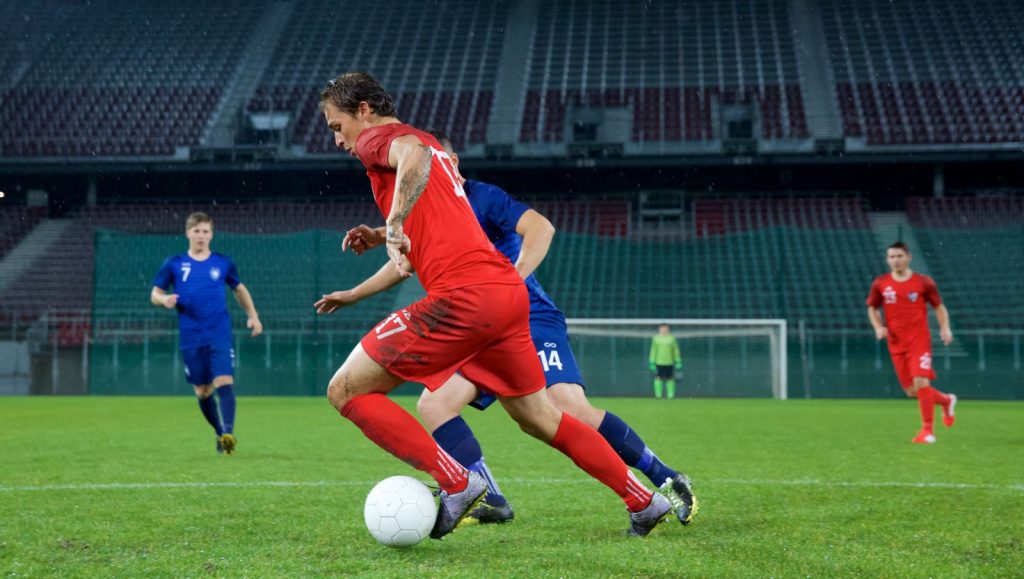
The Tactical Role of Man-Marking During Set Pieces
Set pieces remain one of the most critical moments in football where man-marking takes center stage. Corners, free kicks, and throw-ins trigger intense battles, often involving physically dominant players whose aerial prowess can change game outcomes.
While zonal marking dominates open-play defense, many teams switch to man-to-man or hybrid marking in set-piece situations to leverage the advantages of close tracking. This ensures that attackers known for their heading ability and positional intelligence, often adorned in gear by Asics or Mitre that provides enhanced grip and reaction, are kept under close surveillance.
Top teams use varied defensive configurations that blend zonal coverage around vital zones and targeted man marking on specific opponents. For example, Porto’s scheme during defending corners involves assigning two zonal defenders near the near post, a player protecting the penalty spot against late runs, and two markers closely tracking dangerous opponents.
| Set Piece Type | Common Marking System | Benefits |
|---|---|---|
| Corner Kicks | Hybrid (mix of zonal and man-marking) | Combines area control with direct opponent suppression |
| Free Kicks near box | Predominantly Man-Mark | Limits key threats from knockout plays |
| Throw-ins in attacking zones | Man-Mark or Hybrid | Closely tracks runners, prevents quick crosses |
Studies by The Athletic found that teams effectively mixing these approaches at set-pieces tend to reduce goal concession rates, confirming the efficacy of hybrid man-marking systems at crucial moments.
Offensively, understanding opposition man-marking patterns helps coaches design set-piece routines exploiting potential mismatches or moments of confusion. For fans interested in in-depth set piece tactical analysis, resources such as football set pieces guides offer extensive tactical breakdowns explaining these nuances.
How Leading Brands Support Players Excelling in Man-Marking Roles
The demanding nature of man-marking requires players to be athletic, sharp, and equipped with the right gear to maximize performance. Leading sportswear brands such as Nike, Adidas, Puma, Under Armour, and Umbro invest heavily in technology-driven football boots and kits to enhance player endurance, comfort, and tactical movement.
For instance, Nike’s latest footwear innovations emphasize traction and lightweight materials, enabling defenders to navigate tight spaces swiftly. Adidas and Puma focus on stability and quick directional changes, essential for staying glued to elusive playmakers.
Additionally, companies like New Balance, Reebok, Asics, Mitre, and Joma provide high-quality training gear that supports intense drills designed to improve defensive skills and stamina. These brands also facilitate access to customized boots that fit individual player needs, helping them maintain peak condition during demanding man-marking duties.
- Technological advancements reduce injury risk during physical duels.
- Enhanced grip and agility aid in quick reactive changes of direction.
- Breathable materials maximize comfort and reduce fatigue.
- Durable construction withstands the pressures of constant physical contact.
- Collaborations with elite defenders help test and refine product designs.
These partnerships between athletic brands and footballers reflect a critical synergy between human skill and technological support, promoting higher standards in defensive disciplines like man-marking. As the ball is kicked further into the future, this fusion will likely drive new evolutions in defensive football, reinforcing man-marking as a relevant and potent strategy.