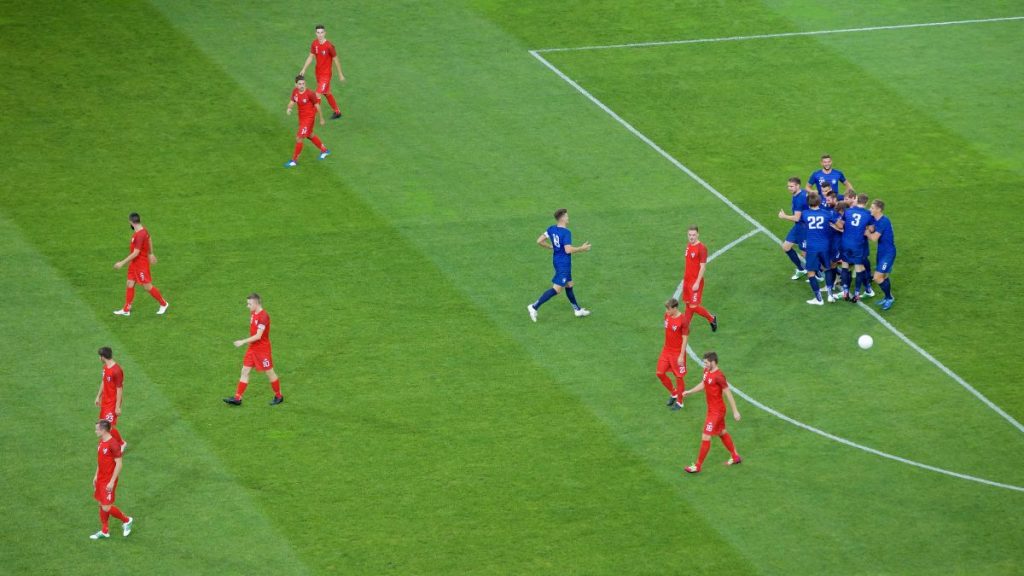
The 2025 FIFA U17 World Cup marks a significant milestone in youth football, hosted by Qatar for the first time. As the tournament unfolds from November 5 to November 27, the world’s most promising young football talents showcase their abilities on a grand stage. With 48 teams competing — the largest ever in U17 history — football enthusiasts eagerly follow standout performances that hint at the stars of tomorrow. Early matches have already revealed emerging players distinguished by skill, tactical awareness, and resilience, drawing attention from both fans and global clubs alike. These young athletes not only embody the future of international football but also reflect the shifting dynamics of youth development programs worldwide. The 2025 edition represents more than a competition; it is a platform where nations’ investments in academies and training methods are put to the test amid fierce rivalry and tremendous hope.
As teams navigate a diverse field representing six confederations, from traditional powerhouses like Brazil, Germany, and France to debutants such as Uganda and El Salvador, the tournament’s widespread reach has fostered a rich blend of playing styles and cultural expressions of the game. This diversity offers a fascinating lens through which to analyze which players show early dominance and how tactical approaches from various continents influence match outcomes. Brands like Nike, Adidas, Puma, Under Armour, and Umbro, integral to the professional world, are already scouting these young talents, recognizing the critical role of youth tournaments in shaping athletes’ commercial and career trajectories. The vibrant atmosphere in Qatar’s stadiums and the players’ electrifying performances have rekindled the global passion for youth football, signaling a promising future for the sport.
In brief:
- 2025 FIFA U17 World Cup features a record 48 teams across six continents, hosted in Qatar.
- Early standout players demonstrate exceptional talent in scoring, playmaking, and tactical intelligence.
- Diversified team participation highlights a range of tactical styles influenced by global football cultures.
- Global brands like Nike and Adidas actively scout and sponsor emerging U17 stars.
- The tournament serves as a critical platform for youth development and career launching.
Emerging Global Talents Shaping Early Tournament Narratives
The onset of the 2025 FIFA U17 World Cup has seen an array of youth players rapidly gaining limelight through their remarkable performances. As scouts and analysts dissect the early group stage matches, several players distinguish themselves not just through raw talent but via their maturity on the pitch. Take for example an emerging forward from Nigeria, representing one of the continent’s traditionally strong sides. His ability to combine speed, agility, and clinical finishing has rattled defenses already. Drawing on Nigeria’s history of U17 excellence – once producing Golden Ball winners such as Kelechi Iheanacho – this new talent embodies the nation’s rich footballing heritage and future promise.
Similarly, European teams, with their strong youth development infrastructures, contribute players exhibiting tactical versatility and technical proficiency. Germany, defending champions since 2023 and a team renowned for disciplined football, has featured a midfielder whose distribution and game reading garner praise. This player’s ability to switch play combined with sharp decision-making illustrates how robust academy systems translate into high-impact performances on the world stage.
Within Asia, host nation Qatar’s squad benefits from the legacy of its recent global tournaments. Qatar’s young stars demonstrate not only technical skill but also remarkable composure. Their exposure to elite competitions such as the 2022 FIFA World Cup and frequent international friendlies, supported by equipment from brands like Puma and Castore, has bolstered their confidence and capacity to perform under pressure.
Key qualities observed in these breakout athletes include:
- Speed and acceleration to outpace opponents and create scoring chances.
- Technical control and dribbling to maintain possession under pressure.
- Strategic vision facilitating accurate passes and tactical positioning.
- Mental resilience to handle the emotional intensity of international competition.
- Physical endurance supported by modern training regimens and advanced sportswear technologies.
These characteristics are evident in players across confederations, highlighting a global convergence in training quality and youth development standards. The immediate impacts of these young footballers extend beyond mere statistics, inspiring future generations and generating excitement around their respective nations.
| Player | Country | Position | Notable Skill | Impact |
|---|---|---|---|---|
| Chinedu A. | Nigeria | Forward | Clinical Finishing | Scored 3 goals in first 2 matches |
| Leon M. | Germany | Midfielder | Game Vision and Passing | Key contributor to build-up play |
| Rashid Y. | Qatar | Midfielder | Composure Under Pressure | Assisted crucial winning goal |
| Hiroto K. | Japan | Defender | Interceptions and Tackling | Helped maintain clean sheet vs Morocco |
How Club Partnerships Influence Early Player Development
Youth talents in this tournament benefit profoundly from partnerships between national teams and global sportswear brands that invest heavily in development programs. Brands such as Nike, Adidas, New Balance, and Umbro provide the latest football boots, apparel, and training technology, enhancing athletes’ performance and reducing injury risks. For example, Germany’s players are outfitted by Adidas, with customized kits designed for optimal mobility and comfort, enabling precise ball control and swift movement. Likewise, Nigeria’s association with Nike ensures access to advanced boots emphasizing traction and speed – critical attributes for forwards like Chinedu.
These brands also engage in grassroots initiatives, offering coaching clinics and talent identification camps globally. Through such efforts, players can access cutting-edge sports science, nutrition advice, and customized gear, which collectively underpin their success at tournaments like the FIFA U17 World Cup. Emerging stars often credit this support network as key to their rapid skill refinement and physical readiness for international competition, highlighting the integral role these partnerships play in shaping youthful potential into elite performance.
Analyzing Tactical Trends in the Early Matches of the 2025 U17 World Cup
Beyond individual brilliance, the 2025 FIFA U17 World Cup reveals fascinating tactical evolutions reflecting modern football’s emphasis on flexibility and pressing intensity. Different continents bring distinct playing philosophies that enrich the tournament’s competitive landscape. For instance, South American teams like Brazil emphasize flair, dribbling, and attacking creativity, drawing crowds with unpredictable offensive sequences. Their youth squads often utilize a 4-2-3-1 formation, allowing agile wingers to exploit wide areas, backed by a technically sound midfield orchestrating transitions.
In contrast, European sides such as France and Belgium adopt a more structured approach, highlighting positional discipline, coordinated pressing, and tactical patience. Their play features compact defensive blocks and quick counterattacks, testing opponents’ adaptability. Such style reflects decades of methodical youth coaching focusing on game understanding as much as technical skills. These teams deploy formations like 4-3-3 or 3-4-3 to maintain midfield control and create numerical advantages.
From Asia, teams like Japan and South Korea demonstrate speed and collective pressing, relying on high-intensity training regimes that condition players for relentless energy expenditure. This approach results in dynamic matches marked by rapid transitions and aggressive ball recovery, challenging rivals to respond swiftly. Coaches often emphasize physical conditioning alongside skill training, reflecting the sport’s holistic evolution.
Key tactical themes identifiable in early group stages include:
- Integration of high presses to disrupt opponents’ build-up play.
- Flexible formation changes mid-match to counter tactical threats.
- Utilization of wide flanks to stretch defenses and create scoring chances.
- Emphasis on youth players’ reading of game tempo and space exploitation.
- Balancing defensive solidity with quick offensive support.
Teams also experiment with dual-purpose players capable of contributing defensively and offensively, enhancing tactical unpredictability. The convergence of these styles epitomizes the global growth of football knowledge, driven by international exchanges, video analysis, and technological insights incorporated into youth programs worldwide. This diversity not only elevates the spectacle but offers participating players invaluable lessons, better preparing them for senior-level football.
| Team | Primary Formation | Playing Style | Key Tactical Strength | Example Player Role |
|---|---|---|---|---|
| Brazil | 4-2-3-1 | Creative Flair & Wide Attacks | Dribbling and Technical Creativity | Winger exploiting spaces |
| France | 4-3-3 | Positional Discipline & Counterattack | Compactness & Organized Defense | False nine pressing high |
| Japan | 4-4-2 | High Pressing & Speed | Quick Transitions & Ball Recovery | Box-to-box midfielder |
| Germany | 3-4-3 | Structured & Balanced Play | Midfield Control & Tactical Awareness | Deep-lying playmaker |
Role of Coaching and Analytics in Shaping U17 Performances
Integral to these tactical trends is the heightened role of coaching staff who harness data analytics and video technology to study opponents and tailor strategies. Coaching teams equipped with analytical tools scrutinize players’ movements, patterns, and opposition weaknesses, often using data supplied by sports brands or official tournament monitoring systems like those supported by Molten and Mitre. Such insights allow for nuanced adjustments that can decide tight matches.
In the early matches of this World Cup, several coaches have demonstrated adaptability by integrating real-time feedback into in-game tactical shifts, reflecting a maturing understanding of technology-assisted coaching even at the youth level. This fusion of traditional coaching wisdom with data-driven decision-making paves the way for smarter football and elevates player development.
Impact of Expanded Team Format on Competitiveness and Exposure
The expansion to 48 teams in 2025 represents a significant evolution for the FIFA U17 World Cup format. Previously limited to 24 or fewer teams, this broad inclusion ushers in new challenges and opportunities for competitiveness, player exposure, and football development worldwide. Many nations making their tournament debuts, such as Uganda and El Salvador, gain invaluable experience competing against established football powers, accelerating their domestic youth programs’ growth.
This expanded format inherently influences tournament scheduling, group arrangements, and knockout qualifications. With 12 groups (A to L), the qualification system advances not only group winners and runners-up but the best eight third-placed teams to the knockout round. This structure incentivizes sustained performance throughout group matches and strategic point collection, encouraging attacking football rather than passive play.
The broader representation also enhances global interest and inclusivity. Nations from continents like Oceania, underrepresented in prior editions, now have more consistent pathways to World Cup exposure. This democratization of youth football contests contributes to leveling the playing field over time, potentially discovering hidden gems from less traditional footballing regions.
- More matches provide greater scouting opportunities for global clubs and sponsors.
- Increased media coverage promotes youth football popularity worldwide.
- Confederations benefit from wider representation, boosting development incentives.
- Players gain earlier exposure to high-pressure international competition.
- Host nation Qatar leverages tournament experience for continued sports diplomacy.
| Group | Teams | Advancement Criteria | Notes |
|---|---|---|---|
| A | Qatar, Italy, South Africa, Bolivia | Top 2 advance + Best 3rd possible | Host group with diverse football cultures |
| B | Japan, Morocco, New Caledonia, Portugal | Top 2 advance + Best 3rd possible | East-West football mix challenging styles |
| C | Senegal, Croatia, Costa Rica, UAE | Top 2 advance + Best 3rd possible | African and European blend |
| D | Argentina, Belgium, Tunisia, Fiji | Top 2 advance + Best 3rd possible | Strong South American and European squads |
| E | England, Venezuela, Haiti, Egypt | Top 2 advance + Best 3rd possible | Competitive mix with English champions |
| F | Mexico, South Korea, Ivory Coast, Switzerland | Top 2 advance + Best 3rd possible | High tactical and physical demands |
Challenges and Opportunities Presented by the Larger Field
Though increased teams provide breadth, it also introduces logistical complexities and heightened competition. Scheduling requires precise coordination across Qatar’s venues, with teams managing recovery and travel carefully. Coaches must prepare players for diverse opponents, each bringing unique tactics and athleticism.
Conversely, this expansion offers smaller nations a spotlight previously inaccessible, allowing the global football community to witness rapidly developing talents. Emerging hopefuls from nations with limited resources can attract interest from professional clubs and sponsors, facilitating growth pathways previously unavailable.
The influx of teams additionally drives innovation in coaching methods, as specialists tailor training to prepare youth for varied playing conditions and opponent styles. This holistic approach signals an encouraging future for the sport’s global reach and competitiveness.

Historical Context and Defending Champions’ Influence on Early Performances
The reigning champions Germany entered the 2025 competition carrying the weight of expectation after their dramatic penalty shootout victory against France in the 2023 World Cup final. Their early group-stage displays reflect a blend of tactical discipline and youthful exuberance, a hallmark that has characterized their success historically at U17 level.
Germany’s football academy system is globally admired for producing successive generations of adept players. This continuity is evident in the current squad’s play, where precise passing, intelligent off-the-ball movement, and strategic pressing dominate. Their current tactical blueprint echoes lessons learned from past star players like Toni Kroos, who once conquered this very tournament to later shine on the senior international stage.
France, the 2001 champions and perennial youth powerhouse, have also made their presence felt early on. Their team combines athleticism and technical prowess, reflecting the country’s comprehensive youth development system supported by clubs and federations. French players benefit from partnerships with brands like Castore and Hummel, ensuring they perform in top-tier uniforms and equipment designed for elite conditions.
The presence of these traditional giants raises the competitive standard, inspiring other teams to elevate their levels. Their early performances set a tactical tempo and psychological benchmark, often dictating the style and intensity of matches within their groups. Consequently, this fosters a fiercely competitive atmosphere that benefits the tournament’s overall quality and entertainment value.
- Germany’s tactical expertise built on historic academy success.
- France’s blend of athleticism and technique fostering dynamic play.
- Legacy players like Toni Kroos inspire current squads.
- Equipment partnerships bolster player confidence and performance.
- Raising the tournament’s global football standards.
| Year | Champion | Runner-up | Notable Players | Impact on Future Stars |
|---|---|---|---|---|
| 2023 | Germany | France | Joachim L. | Set stage for senior breakthroughs |
| 2019 | Brazil | Mexico | Lazaro | Boosted Brazil’s youth reputation |
| 2017 | England | Spain | Phil Foden | Launched successful club career |
| 2015 | Nigeria | Britain | Kelechi Iheanacho | Proved African dominance at youth level |
Defending Champions’ Strategic Approaches Setting the Benchmark
Germany’s methodical game plans reveal a comprehensive preparation culture with a focus on controlling tempo and minimizing errors. Their coaches emphasize adaptability, promoting youth players who can seamlessly transition between defensive and offensive roles. This fluidity manifests through their use of formations such as 3-4-3 that allow midfield dominance, reflecting the sophistication typical of senior international teams.
Their success story serves as a blueprint for other participants, challenging them to invest in holistic youth systems that combine technical skill training, physical conditioning, and mental fortitude. Consequently, this continually elevates the global standard of the FIFA U17 World Cup, fostering a nurturing yet intense environment for future football stars.